Monday, September 26, 2022

"A Crock Full of Green Sweet Pickles and Leadership Principles"

"A Crock Full of Green Sweet Pickles and Leadership Principles"
Darrel L. Hammon

I recently resurrected my mother’s famous green sweet pickle recipe and made some! Along the way, I realized that making these pickles is a lot like some principles of leadership. So I had to ask, “What does making a crock full of pickles have to do with leadership?”

It’s about change—I remembered how good those pickles were when I was a kid. When my mother passed away, the making of the pickles died with her. I decided I wanted pickles, so I had to change the “woe-is-me-my-mother-is-dead-and-no-one-can-make-her-green-sweet-pickles-ever-again” attitude. I just pivoted and decided to resurrect the making of her famous pickles. Change and pivoting happen all the time, and we must be prepared for it when it happens or when we strive to make it happen.


It’s about reading a recipe of time past and revising it to meet the needs of today—My mother loved to write in cursive as do I, but her cursive at the time she was writing was a bit hard to read. I spent some time trying to decipher what she meant. Yes, I had to go out for a “consult” with my sister to make sure I knew what her actual directions were. It’s not a terrible thing to reach out to others, particularly experts to help us along the way. The overall outcome was better than I thought it was going to be. I was prepared for disaster, and, thankfully, it didn’t happen.

 It’s about reading between the lines—My mother’s recipe has specific things that she used to do to make the pickles. But because she knew exactly what to do, she left out a few important steps that I had to improvise and review. Plus, I had to reach out to my sister for another “consult” to make sure I was on the right track. Many times, we know what needs to be done, but we also have to read between the lines to make sure we create a holistic process or view of what we ultimately want to happen.

It’s about patience—Washing, soaking, cutting, washing, soaking, and even more soaking for almost 30 days. More often than not, we have to have patience as we wait for something to mature or allow our creativity to take shape within our organization. Success doesn’t happen immediately. It takes time and lots of patience.

It’s about scraping off the mold—At one point in the pickle-making process, I had to scrape off a little mold that had begun to grow on top of the wooden lid into the water. While the mold looked yucky and terrifyingly gross, the mold didn’t affect the ultimate outcome. Rather, it made me trust the process my mother began almost 60 years ago and understand that scraping mold was just part of the process. Processes that don’t work sometimes surface and need to be scraped off, changed, revised, and even tossed for our successful movement forward to continue.

It’s about appreciating the past and working toward the future—I appreciated that my mother had introduced me to her famous pickles years ago. While her pickles went away when she died, that didn’t stop me from looking to the future and how I was going to make those same pickles again with maybe a bit of difference. I knew she could do it, and she taught me that I could do things, too. I guess the strategic planning formula of P + F = PR (Past + the Future = the Present) works to create success.

It’s about adding a bit of food coloring—My mother always added green food coloring to her famous green sweet pickles. I decided to do the same, only I didn’t add as much. Amazingly, they tasted the same, but they looked great in the bottles. Often, we have to insert a bit of coloring into the mix to make it look good and maybe a bit prettier, but this doesn’t change the overall outcome.

It’s about taking something from its natural state and creating something incredible—Many people don’t like cucumbers (a.k.a. “cukes”). I grew cukes, nurtured and harvested them, cut them up, let them soak for weeks in a brine mixture, and then made these delicious green sweet pickles with a tinge of tanginess. It was wonderful to watch the transformation of common cukes into something uncommon and delicious in its own way. Our organizations can grow the same way as we nurture them along and turn them into something that is possibly even better.


Next time you want to make pickles or anything, think about how it relates to your leadership and how you are transitioning, creating, and pivoting along the way.


Thursday, September 8, 2022

Learn to Grow Where You Are Planted

I have lived in a few places in my life--Idaho, Chile, Montana, Wyoming, Dominican Republic, California, and Utah.


I have discovered that no matter where you are planted, you can grow and bloom!

It was tough to grow things in Montana and Wyoming. That wind in southeastern Wyoming is perfect for wind energy, but for growing tomatoes, raspberries, and corn, it was downright challenging. Thankfully, there were some farmers who had mastered the art of growing edible things in these parts of the world.


You just need to discover where the nutrients and resources are and then tap into them and learn how to use them albeit judiciously.

That means you have to get out of your comfort zone and determine where those resources are.

They may be your next-door neighbor--yes, you probably ought to knock on their door and introduce yourself. They could be at your new church congregation. They are probably definitely at your place of work, maybe in the next cubicle or on your next Zoom call. They may even be lurking at your local library.


Tapping resources reminds me of growing sunflowers. They grow almost anywhere. The amazing thing is that their beautiful heads follow the source--the resource, if you will--all day long. As you them during the day, their glorious heads follow the sun. I never tire of watching them grow and just become something magnificent.


Once you do that, you will be able to flourish even more! That's the beauty of it. So, learn to grow where you are planted.

#work #energy #beauty #art #leadership #understandingyourself #choicesmatter #becoming #lifecoaching


Thursday, September 1, 2022

Pivoting to a New View and Perspective

Pivoting to a New View and Perspective"
Darrel L. Hammon
July 2022

The word pivot can be both a noun and a verb. When I was growing up in Idaho, home to probably the best potatoes on the planet, many potato farmers began to expand their farms and convert large chunks of land into huge potato fields as well as a host of other crops. They needed a way to control water irrigation of these large tracts. Thus, the “pivot” was invented to create a mechanized way to manage a consistent irrigation pattern that could irrigate hundreds of acres at a time, thus increasing their production to feed the growing number of people in the world.

This “pivot” monumentally changed the way farmers irrigated potatoes and other crops in their ever-growing production chain. Now, instead of scratching their heads and fretting about consistent irrigation methods, they could irrigate thousands of acres of crops by installing massive pivots throughout their farms and grow enormous amounts of hay, grain, potatoes, beans, corn, and a host of other crops that feed the world. They did all this by planting pivots and learning to pivot in a variety of ways.

In my younger days, I loved to play basketball. I learned the hard way that you cannot hold the ball and move both feet around. It’s called “traveling,” and you have to give up the ball to the other team, thus losing possession of the ball. To be able to move around while holding the ball, you must keep one foot—the pivot foot—planted on the floor while you moved the other foot, which can pivot around in any direction.

In our lives, we experience some of these same challenges, perhaps more similar than we can imagine. We, too, stare out into our fields of dreams and wonder how we are going to make our dreams grow and come to great and life-changing fruition. Repeatedly, then, we need to plant a pivot in our lives so we can pivot to make the changes, hopefully in a direction that we need to so we can improve and enhance our lives.

So, how do we pivot in life? Let’s discuss six principles of pivoting.

Pivoting is merely learning how to make changes in our life.

Often, we suffer from the paralysis of doing something different. We feel comfortable in what we are doing, but we don’t like what we are doing. We feel stagnant in our jobs and/or our lives. But the thought of change frightens us. What we must understand is that pivoting simply means that we make incremental changes. Changes don’t have to be giant steps to one side or the other. Rather, they just need to be big enough to move us in a different direction. Thus, we pivot to a new direction, a new view.

Pivoting does not mean you are quitting.

Frequently, when we find ourselves in a situation that we need to change, we believe we have to quit our job, whatever we are doing at the moment, or the direction we are going. Sometimes we do have to stop what we are doing and contemplate our next move. More often than not, it is merely pivoting in a different direction. We don’t necessarily have to quit, just pivot.

Pivoting requires foresight mixed with hindsight.

One of the equations in strategic planning is F +P = PR (Future + Past = Present). We need to know where we have been, know where we want to go, and that decision becomes our present. Once we know where we are going, pivoting comes into play, so, we pivot to where we want to go. The amazing part of pivoting is that even a slight pivot can change our direction and give us a new perspective and view because we see things differently, thus helping us see the future more clearly.

Pivoting is a natural way of changing directions.

Throughout our lives, we have always had to pivot in some way. I started first grade in the same house and lived there until I was 19 years old. For the first three grades, I went to one school. For 4th through 6th, I went to another school and a brand-new school for the later part of 6th grade; for 7th-8th grade, I traveled seven miles to another school; for 9th grade, I attended a different school; and then for 10th through my senior year, I traveled seven miles in a different direction—all the time living in the same house. I had to pivot every school year. Granted, many of the same students did the same thing. Sometimes, we went to a different city, and students from other communities joined us. Environments changed; some friends changed. Pivoting happened almost daily. Then, when I was 19, I served a mission for my Church in southern Chile, thousands of miles from my home in Menan, Idaho. Population 596. Talk about a major pivot for two years—a new language, new culture, new country, new friends, new food, and big black boots for the rain. Pivoting is what we all have done throughout our lives. It’s just what we do.

Pivoting allows you to see life in 360-degree mode.

The best part of pivoting is that we can ultimately see ourselves and the world in 360-degree mode if we choose. Seeing our lives in 360-degree mode may be highly influencing, enlightening, and refreshing. Seeing the 360-degree mode allows us to become more holistic so we can see and feel the whole view, not the narrow focus that disallows us to be in tune with everything around us. We must see all to be able to see ourselves in the true light, our own best selves.

Pivoting can be pivotal in your life.

Pivoting periodically in our lives can produce the results we have always desired. It is essential that we pivot. If we are not progressing and growing, we are retrogressing. There really isn’t such a thing as stagnation. Each pivot can be a pivotal step in our lives. Even members of our team can pivot and help us see differently and gain a new perspective. Together, we can learn to change. We can change to become what we desire to become. Pivoting will change our lives and our organizations for the best if we choose well and positively change our future.

Sometimes you have to pivot to capture a better view and position yourself for the success you want and deserve. Don’t hesitate. Begin pivoting now!

Tuesday, June 7, 2022

Stay-at-home moms—a worthy job not for the faint of heart

Stay-at-home moms—a worthy job not for the faint of heart
Darrel L. Hammon

Not long ago, I was talking to Trisha, a good friend who is a stay-at-home-mom (SAHM) with a master's degree and now writing a book about being adopted. We talked about the "job titles" and skills SAHMs need to have to survive while being stay-at-home moms.

Consequently, I asked this question of my followers via social media, some of them SAHMs: "If you were to build a résumé for a stay-at-home mom what components, skills, experiences, etc. would you include as part of this overwhelming job?

My asking the question and ultimately writing this article was/is not to “glorify,” or even “hero-i-fy” SAHMs. Rather, it is to acknowledge and validate their enormous contributions and talents and give them credence for having chosen to be stay-at-home moms in their own homes when they could have easily been out serving as leaders in corporate America. As Trisha so deftly stated, “I have chosen Motherhood as my career, but it is exhausting!”
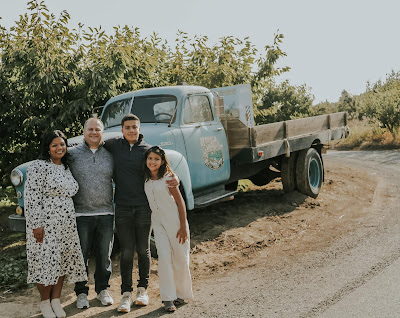
SAHM Trisha, master's prepared Early Childhood Development

The responses to my question were overwhelming, the majority coming from SAHMs. They were diverse, funny, professional, profound, exact, insightful, inspiring, practical, and awe-inspiring. Their answers made me tired just reading all the things that SAHMs do every single day.

Think of this partial list and not in any particular order or hierarchy:

Counselor/Therapist—How many times have we talked to our mothers about everything and cried on their shoulders over breakups, bad test scores, and pets and animals dying?

Healthcare provider—It’s a wonder children even survive from bike wrecks, skinned knees, broken legs and arms, falling off swings, and a host of other accidents.

Gardner/landscaper—We have all wanted to plant something, and then mother had to take care of it and not because she wanted to do it. She just hated for something green to die.

Chef/restaurateur—So many of us may have complained about what our mother made or created for meals, but I suspect most of us have called home for the recipe of something she had made or craved that special dish that only our mothers made.

Entrepreneur—How many little businesses have mom helped us with? I know my mother helped my siblings learn how to be lawnmowers and nightcrawler sellers, and lemonade stand operators.

Caregiver—Moms are caregivers to everyone—family, neighbors, cats, dogs, piglets, calves, and anyone who needs help.

Teacher/tutor/mentor—Moms have become teachers of every subject in school. Often, she would study harder than we did just so she could help us with some esoteric problem that we need to do.

Motivator/cheerleader—No one can count the number of ballgames, soccer and tennis matches, speech and drama events that our mothers have attended, no matter how boring, no matter the weather, no matter the place, and she brought treats for everyone.

Chauffer/taxi— Our mothers log thousands of miles in taking us everywhere we need to go to help us participate in and attend activities. Most of the time, we are just in the back of the car, doodling, singing, playing, listening to music, reading, and probably not paying attention. Yet, our SAHMs safely maneuver our vehicles through rain, snow, sleet, and dreary days.

Entertainer—My mother was an entertainer. She danced. She laughed. She sang. She even did yoga. Plus, some SAHMs read bedtime stories as if they are performing before a large audience. That’s why kids love to be read to. It’s entertaining and soothing simultaneously.

SAHM Amanda with her young family

Mediator/arbitrator—Good thing moms know mediation and arbitration. They all should receive honorary law degrees and mediation certificates for all of the challenges and hot water she got us out of, and that was all before dad arrived home.

Handyperson—Plumbers, electricians, sheet rockers, home repairers, etc.—Have tool kit, and SAHMs are in their element. I suspect most of them did not realize what they were up against when they first had children. But, alas, they had to become fix-it-everything. Instead of Disney calling it “Fix-it-Ralph,” they should have named the movie, “Fix-it-Regina or Rachel.”

No walls? No problem!" said SAHM Sandra Dee

Performance reviewers—From piano, cello, and violin recitals to plays to dance festivals, SAHMs have always had to review how everyone did. As you watch children greet their parents after they have performed, their first words are, “How did I do?” usually looking directly at their mothers.

Audience—“Mom, watch this!” And then our SAHMs would watch whatever “creative” thing we showed her, usually without rolling her eyes—at least that we ever saw.

Art critic/reviewer—SAHMs have seen more art on paper, on the sidewalks, and on the walls than real art critics and reviewers. I wish SAHMs had taken photos of their fridges over the years to validate all of the art we did have. Ironically, my mother saved a few of my art pieces that I now cherish but never show anyone.

Laundry specialists—My own mother, a SAHM, had eight children. She even had a clothesline outside that usually had some type of washing hanging from it. And they smelled so good. Now, the smell is Downey or some fabric soften. I think I prefer the outdoor, wind-driven smell. Sometimes I wonder how many batches of laundry SAHMs do per week. Countless!

Researchers— SAHMs spent too much time trying to find things for all of us. Think of the reports, papers, and speeches that she helped you with throughout your schooling. Now with Google and other search engines, how much time does she spend searching for less expensive things or of better quality?

Preachers/clergy—Ah, the confessions our SAHMs heard from our repentant lips, knowing all along we would repeat the infractions the very next day, if not that very afternoon.

Vet techs—Animals get sick, and SAHMs know how to heal animals.

Probation officer/police chief—Yes, we all were on probation, time out, or grounded at some point in our lives, even for weeks and months. It was our SAHMs who had to endure the clanging of the jail cells and the moans from our lips that she wasn’t being fair. But she was persistent and consistent in metering out the punishments.

Problem solver—Are there books out there written by SAHMs for other SAHMs? They just seem to know how to solve every single problem that arises. Mostly, though, they help us solve our problems so that we can become better problem solvers in the future.

Crisis and conflict management consultant—During our growing up years, crises seem to pop up every single day, and usually, the first person we approach to help us is our moms. When moms are SAHMs, they have to deal with every crisis, large or small. Amazingly, they guide us through them. That’s why SAHMs are crisis management consultants. They know how to help us manage the crises in our lives.

Lifelong learners— Most SAHMs never quit learning, no matter how much education they receive before coming mothers. They have to keep up with the times and help their children with the never-ending newness that seems to emerge every year. One such mother is Sandra Dee. She stated that she “didn’t quit learning.” Rather, she learned how to fix computers, frame closets, hang sheetrock, renovated rooms, install electrical outlets, change the oil in cars, and a host of other trades. She ended with “I have learned that being a full-time mom isn't always appreciated, but I wouldn't trade it for any other job in the world.” Her daughter followed in her footsteps.

SAHM Sandra can fix or repair anything
with the help of classes and YouTube videos!

Computer technologist—This is a new one. Some SAHMs do not have this skill although the last couple of generations of SAHMs are much better because they have learned technology in their youth. I believe, however, that the best thing they could have done is taken the devices away for a while.

Planning and activities specialist—Party planner, soccer and basketball practice planner, test planner, food planner, birthday party planner, and host of other event planning. SAHMs know how to plan.

Organizer—How many of you could ask your SAHMs where something was, and she knew exactly where it was at any given time? She probably knew where everything was because she was the one who had to finally put it in a safe place, instead of having it scattered throughout the house.

Chief executive officer (CEO)—In several homes, the SAHM becomes the CEO because she is also a single parent, trying to manage the entire household, delegating chores and responsibilities, and teaching her children how to do so many tasks that children need to learn to become viable citizens in the future. Her family is her team and organization. 

Chief operational officer (COO)—Literally everything that happened in our house, my SAHMs seemed to be in charge and guided us in getting things done. Our garden was huge, and at harvest time, she seemed to know everything about canning, bottling, cooking, preparing, and harvesting.

Chief financial officer (CFO)—Most SAHMs seem to be in charge of everything dealing with money and finances, even figuring out financial aid for college, helping set up saving accounts, and creating jobs to help us earn money.

Communication specialist—Who taught us to talk, speak on the phone, talk politely to our neighbors, say kind words to our siblings (or at least how we should do it), say the right words at the right time, slow down when we talk to fast, not talk with our mouths full, and more communication nuances.

Homework reviewer
—We all had homework. Someone had to review it, whether it was math, language arts, reading, science, social studies, history, or whatever, SAHMs reviewed it and even taught maybe a more effective way although our teachers didn’t like it.

Jack of all trades—Overall, SAHMs know how to do everything—or so we thought and keep sacred in our minds and remembrances. Now, we wish we could have been like them in every way.

One SAHM Sandra added the rock tiles; tiled the floor and stairs; sheet rocked, insulated and painted the walls; and finished the stair railing.

And many, many, many more titles!

Tana, a master’s prepared speech therapist with several children, many of them adopted from various countries, described SAHMs in such an elegant and factual way: “So I think most SAHMs could probably describe themselves as able to respond gracefully to unwarranted criticism. We could also pretty much universally say that we work well under pressure from internal and external sources, adjust quickly to changing responsibilities with little or no notice, and are excellent prioritizers. I want people to understand that I made this choice because it was what I wanted.”
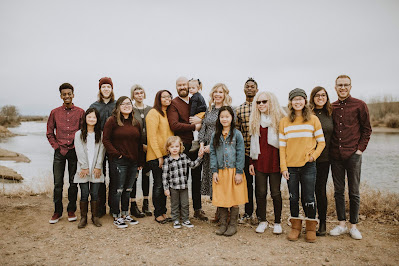
Family of Tana, a master’s prepared speech therapist

At some point, may SAHMs want to return to the workplace. Tana penned a message for Human Resource personnel: “For a former stay-at-home mom getting back into the workforce, it can be really tough to get employers to take these skills and abilities seriously, and that's a travesty. Yeah, the woman may not be up on the latest version of Excel or may not have a thousand LinkedIn connections, but so what? Her abilities are time-tested, HONED, and she is battle-ready. She knows how to WORK, and even better, she knows how to get results. Give her a chance, Ms. Human Resources, and let her do her thing!”

All you SAHMs, you are the best, you are phenomenal, and you are inspiring to all of us, and we thank you for being so wonderful for what you do as stay-at-home moms. We are just happy that you choose to do all things—all the while smiling and being positive! We believe in you!


Wednesday, May 25, 2022

“Leadership: Today and Forever in Haiti"

“Leadership: Today and Forever”
May 18, 2022
Haiti

Leadership happens around the world because people want to become better and more effective leaders at all levels. Just a week ago, I utilized Zoom to “go to” Haiti to meet with over 50 participants in a leadership seminar titled “Leadership: Today and Forever.”

But the idea for the training didn’t start in Haiti.

Almost two months ago, my wife Joanne and I flew to Puerto Plata, Dominican Republic, for the first leadership class at the Dominican Starfish Foundation’s Community Center where 40 participants participated in “Liderazgo, Hoy y Para Siempre” (“Leadership: Today and Forever”) along with another 90 at a local church. We discussed leadership on the fundamental levels, what a leader is or should be, the role of a leader, leadership styles and characteristics, values, and principles of leadership.

Just after I arrived home from the Dominican Republic, I received an email from Mackenson Noël, a good friend and colleague from Haiti, who said, “When are you coming to Haiti to teach us the same leadership principles that you taught to our Dominican friends?” 

We decided that it might not be physically conducive to go to Haiti at this time, but I could come via Zoom. We agreed that would be the best option. So, we began planning for the training.

A few challenges arose: I don’t speak French or Creole, so the seminar would need to be in English; and would the technology be sufficient to do it? Ever positive and willing, Mackenson was sure that it would happen. 

Challenges are meant to be overcome. Mackenson secured a local church, gathered up the best techno-people and equipment he could find, created a learning opportunity for English-speaking Haitians, and invited them to come to a leadership training.

Over the next few weeks, I developed the flyer in English, sent it to Mackenson to review, and then he sent it out. Soon, a self-selected group of leaders and emerging leaders enrolled in the leadership seminar. 

The day before the event, we tested the technology and the Zoom link to make sure that all systems were a go. True to his word, Mackenson did a wonderful job of organizing everything, and the technology, including the speakers throughout the chapel and the Zoom link, was working beautifully!

When I asked Mackenson what additional things he was expecting or principles he wished to be taught, he confidently said, “This is going to be a historical experience for us. We have high expectations for a wonderful leadership training from you.” That caused me some anxiety.

Finally, the day came, and we gathered together with entrepreneurs, an area seventy, the Haiti mission president, other church leaders and employees, and community leaders. Many of the 50 participants were scattered throughout Haiti and attended via Zoom with a few participants at the Church near the temple. 

When asked why they had come to the seminar, they replied:
  • “increase capacity,”
  • “learn the role of a leader,”
  • “lead better and follow vision,”
  • “understand the difference between management and leadership,”
  • “learn how to continue to practice when I fail,”
  • “gain the ability to lead,”
  • “find the right solutions,”
  • and many, many others.
When I initially asked them why they wanted to be a leader, many participants said, “I want to make a difference in the lives of my fellow Haitians.” 

Some of the challenges they were currently facing were:
  • “feeling comfortable directing the work of others,”
  • “working through conflict management,”
  • “learning to lead in chaos,”
  • “helping people feel confident in their job,”
  • “procrastinating completing goals,”
  • “not concentrating on the right things,”
  • “developing staff development programs in their organizations,”
  • and several others.


We worked on personal leadership plans after understanding their strengths, weaknesses, opportunities, and threats (SWOT). We discussed the characteristics and values of leaders and how they were going to continue obtaining these characteristics. They all desperately wanted to succeed as leaders, personally and professionally.

One of the quotes from President John Quincy Adams stirred several questions: He said, “If your actions inspire others to dream more, learn more, do more, and become more, you are a leader.” One participant, Shelsea, said, “After listening to this quote, I have to ask myself, ‘Do my actions inspire others? Do I inspire others to learn more, dream more, and become more’?” 

Throughout the leadership training, they learned about themselves and what additional skills they needed to obtain—all the while doing and becoming the leaders they want to be. Randy learned some ways to enhance the way she “directed the work of others.” Spencer discovered that “learning is about others and focusing on them.” Another participant, Roy, decided she had three things to do: “1) upgrade myself, 2) develop more skills, and 3) learn how to develop solutions to overcoming my challenges and problems.” 


After the training, another participant, Ania, wrote to me and said, “I could understand better the sense of leadership, and I’m working more on myself now. I’m devoted to helping people more than before, so I’m on my way to change to become the best version of myself.” 


Three hours are not enough to learn the fundamentals of leadership, The training instilled in the participants a sense of wanting to inculcate these principles in every aspect of their lives, now and forever.

To help continue the training and learning, we all decided we would re-connect in a few weeks. They were hungry to learn more about leadership. Their leadership plans showed many excellent goals to become better leaders and individuals, knowing that when they do complete their goals, they will increase their abilities to lead in their organizations, create opportunities for others to grow and develop, and enhance their own futures and the future of their country.

Warren Bennis once said, “Leadership is the capacity to translate vision into reality,” and these Haitian leaders and emerging leaders are on their way to translating their vision into their leadership reality and ultimately making a difference in the lives of their fellow Haitians. 

Isn’t that what leadership is all about? Knowing and showing the way? Following a vision and inviting others to come along and participate vigorously together as a team? And helping people feel confident about themselves and others?

Ultimately, then, to become a leader, we must learn what a leader is and does, and then begin to apply those principles in our daily lives. Once we start the application process, we will see gradual changes in our behavior, our values, and our principles.

Thank you, my Haitian friends and leaders! And on you go! See you in a few weeks!


Thursday, April 28, 2022

"A Vision of Continuing Education and Lifelong Learning"

"A Vision of Continuing Education and Lifelong Learning"
Darrel L. Hammon, Ph.D.


Continuing education and lifelong learning foster the “building, challenging, strengthening, and enlarging” of oneself to do things never done before, accomplish goals and tasks set previously but never fulfilled, prove that you can do something despite the challenges strewn along the way, rise to a challenge that seemed way too hard at first, change the way you look at the world, commit to the philosophy of lifelong learning, and widen your vision so that you can see afar off.

The vision of continuing education and lifelong learning focuses on the 78-year-old GED graduate some years ago who said, “I am getting my GED because I know I will be a good example to my grandchildren.” Donned in a traditional cap and gown, she received a standing ovation as she walked across the stage and waved to her family before she took her place among her fellow graduates.

The vision of continuing education and lifelong learning highlights the 30 or so more mature adults who all trundled to Lewiston, Idaho, and Lewis-Clark State College to participate in one of the many available Elderhostel activities. These adults, many of them 60 and over, came from across the country and participated in a week-long course that introduced them to Lewis and Clark and the Corps of Discovery. Their education might have ended several decades ago, but their learning never stopped. Instead, they sought opportunities because, as one of them commented, “I love to learn.”


The vision of continuing education and lifelong learning touches on the woman who, after her experience with BYU’s Bachelor of General Studies program, said “[it] opened doors and gave me confidence…. in what I can accomplish at this later stage of my life….given me new skills to work with. And it has reminded me that life is a continual learning process.”

The vision of continuing education and lifelong learning finds many people going from their day jobs to a class at their local college or university to enhance their skills or take a class in coding, leadership, nursing, property management, web design, creative writing, and a plethora of other educational programs that propel them toward their education and life goals of learning something different so they can become someone different. They will succeed and then continue forward, improving themselves at every level.

The vision of continuing education and lifelong learning expounds Jaime Escalante’s phrase, “Free, free, free, knowledge; bring your own containers.” Continuing education is all about that phrase. Knowledge oozes out of every corner and crack of life. Often it just seeps by us or hangs from luscious baskets within our reach, but sometimes we do not take advantage of the proliferation of knowledge around us. Or we fail to pack around our own containers, our buckets. Or worse, just the bottoms of our buckets are covered, and we say, “I’ve got all the knowledge I want.”


The vision of continuing education and lifelong learning connects people with educational opportunities, develops programs to meet the demands of the swirling marketplace, and prepares students to live and work in a global society, no matter how old they are, where they live, or what modality they are utilizing. The vision is to help people learn what they want and need to learn and then develop programming to meet their educational needs. Isn’t that the essence of developing the whole person and how they can leave their imprint upon the world, their workplace, their families, and themselves?

The vision of continuing education and lifelong learning is about access—to distance and online learning; to youth and summer camps, independent studies, study abroad programs; to language programs such as Spanish, Portuguese, and Chinese; to evening and off-campus programming at various locations; and to a cadre of incredibly focused programs and courses for youth and adult learners.

Continuing education and lifelong learning advocates—yes, even educational entrepreneurs—are asking the right questions: Is what we are providing meeting the needs and desires of our constituents, students, educational markets, and even beyond? What does the growing community want and need? And finally, what more should we be doing to extend our college or university experience beyond the boundaries of the physical campus?


In essence, learning through continuing education and lifelong learning are inextricably linked to investment, an investment in ourselves and our families that yields high benefits and interest, maybe not today or tomorrow, but it will yield—intellectually, spiritually, and mentally. We may have to bend our backs, stretch our minds, work amidst wind and snowstorms and tauntings of others, and maybe even make a few sacrifices. But that’s the vision of continuing education and lifelong learning: providing opportunities to learn and gain experience, helping others become better people, enlightening their minds, and establishing a true house of learning because, in the end, it’s all worth it.

Thus, invest now and often and keep your educational and learning bank account growing and your buckets filling up.

Monday, April 4, 2022

“Liderazgo, Hoy y Para Siempre”: Visita Humanitaria/Educativa a la República Dominicana

Visita Humanitaria/Educativa a la República Dominicana
“Liderazgo, Hoy y Para Siempre”

Joanne y yo acabamos de regresar de Puerto Plata, República Dominicana, donde pudimos participar en una visita educativa/humanitaria fenomenal en apoyo de la Fundación Dominicana Starfish (Estrella de Mar).

Algunas de los participantes

Louise ZoBell es la Directora Ejecutiva de la Fundación Dominicana Starfish, con sede en Sterling, Canadá, con dos grupos hermanos: “PAL Humanitarian dba Dominican Starfish Foundation” en los Estados Unidos (Utah), y la “Fundación Amor, Estrella de Mar, es Amor” en la República Dominicana.

Jack y Louise ZoBell de Alberta, Canadá

En los últimos años, la Fundación Estrella de Mar Dominicana ha construido o renovado más de 160 viviendas en el área de Puerto Plata. También han construido una escuela y han ayudado a numerosas familias proporcionándoles ropa, zapatos, comida, juegos infantiles y muchos otros artículos.

Antes y después

Recientemente, construyeron un centro educativo en la comunidad de Javillar para comenzar a ofrecer un cuadro de servicios educativos y proporcionar lugares para dentistas, médicos y quiroprácticos para brindar servicios médicos y dentales a los más necesitados.

El Centro Educativo en Javillar (Puerto Plata)

A fines de 2021, me reuní con sus juntas directivas y les ayudé a desarrollar un plan estratégico para desarrollar capacidades y mejorar lo que estaba haciendo la Fundación.

Después de varias conversaciones, Louise y yo decidimos que sería maravilloso iniciar ofertas educativas brindando un taller de liderazgo para líderes emergentes y futuros en Javillar y Puerto Plata.

Algunos de los participantes

Me comuniqué con la directora dominicana de la Fundación, Amarilis Ureña, y otras personas acerca de la capacitación. Estaban entusiasmados con el potencial de tener seminarios de liderazgo. Muchas personas fueron fundamentales en la planificación y el desarrollo de la capacitación. Muchas gracias a Amarilis y su increíble equipo y Louise, Lorenzo Castillo, Eddy Morrobel, e Immanuel Rosario.

Amarilis y Louise

Para nuestra primera clase en el Centro Educativo de la Fundación el 22 de marzo de 2022, más de 40 participantes participaron en “Liderazgo, Hoy y Para Siempre”. Discutimos el liderazgo en los niveles fundamentales, lo que es o debería ser un líder, el papel de un líder, estilos y características de liderazgo, valores y principios de liderazgo.


El segundo día de la clase, desarrollamos un plan de acción sobre lo que iban a hacer para implementar algunos de los principios que habíamos discutido en la clase. Me impresionó lo emocionados que estaban por completar esta tarea. Trabajaron diligentemente solos y en grupos para desarrollar su “Plan de Acción”. 


Una empresa en particular había enviado a cinco de sus empleados a participar y aprender. Se fueron con un plan personal y un plan para ayudar a la empresa. 

Los jovenes de la empresa/asociación

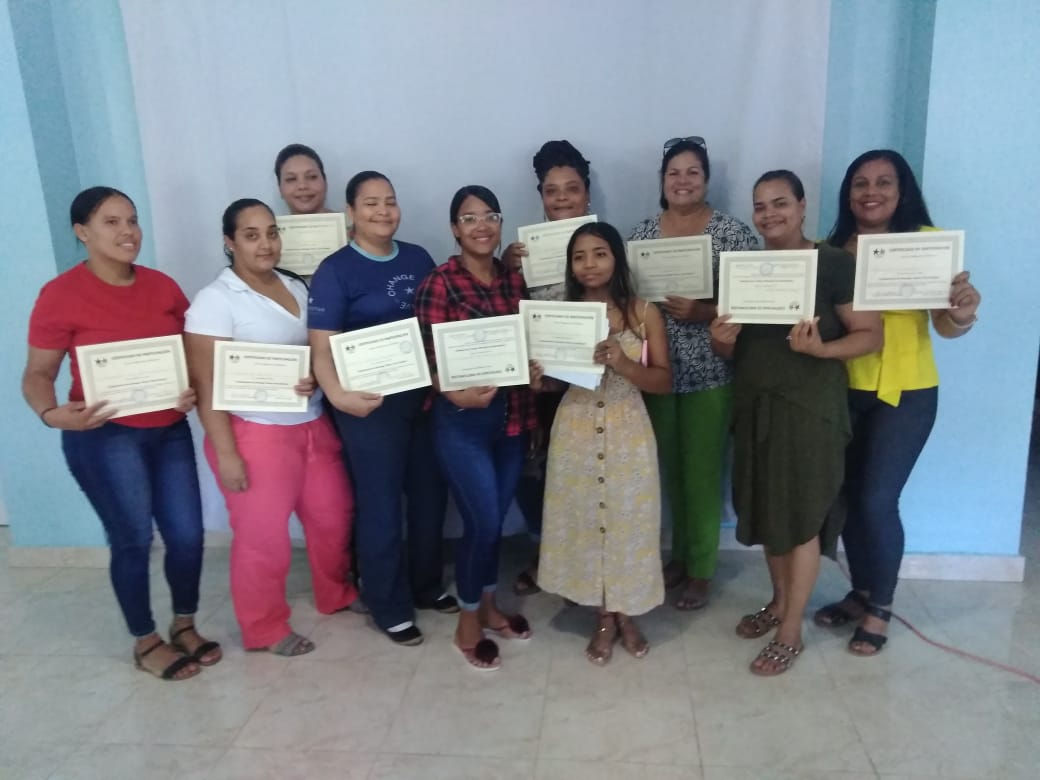
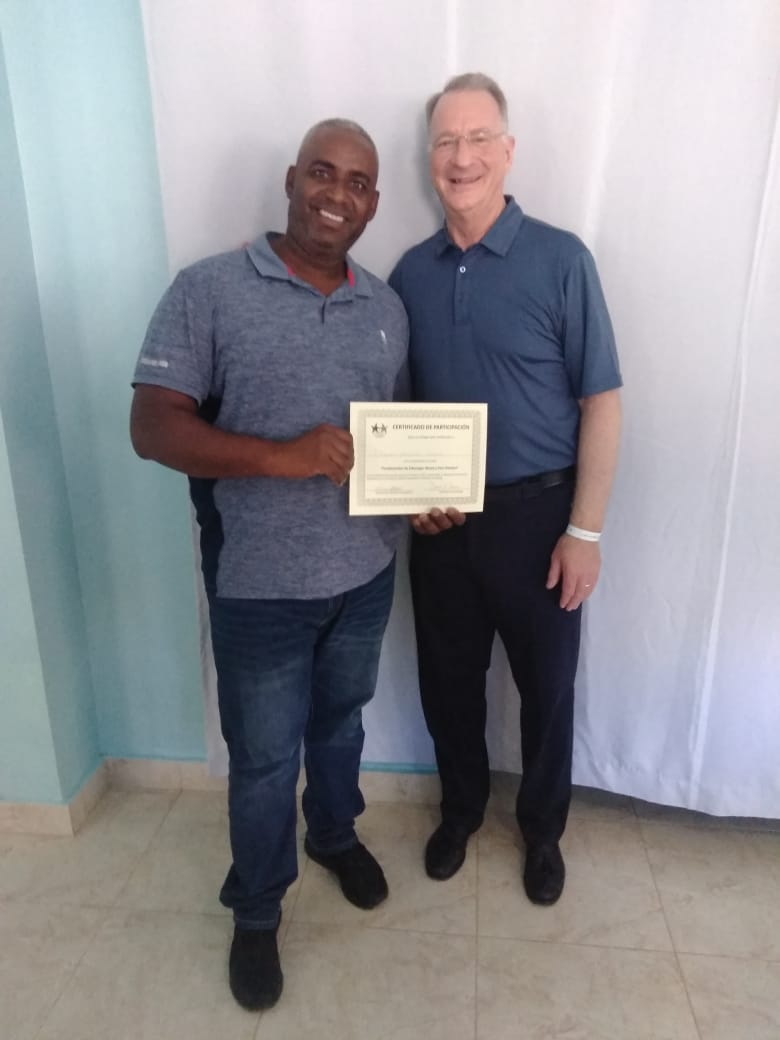
Al final de la capacitación de liderazgo, la Fundación Estrella de Mar Dominicana y yo habíamos preparado un certificado para entregar a cada participante que completó el evento de dos días. Se inspiró en una ceremonia de graduación, en la que cada persona se presentó, recibió su certificado y se tomó una fotografía.

Disfruté mucho estar allí con ellos y enseñarles los fundamentos y principios del liderazgo, todo en español, ¡lo cual fue un placer! Probablemente lo más divertido fue sacarse fotos con todos los participantes. Muchos de ellos querían fotos grupales con varios estudiantes y conmigo. ¿Cómo puedes decirle que no a eso?

Uno de los participantes

Algunas de los participantes

Además, hice una versión nocturna recortada del seminario de liderazgo de dos días con un grupo de 90 personas: miembros de nuestra iglesia, miembros de la comunidad, y líderes de la ciudad. Fueron tres horas increíbles de conversación, preguntas, aprendizaje, intercambio y elaboración de sus propios planes de acción.


Nuevamente, tuvimos una ceremonia de graduación y entregamos un certificado a cada persona que había participado. Muchos de ellos se acercaron y me agradecieron por la capacitación que habían recibido.


Joanne y yo disfrutamos mucho de nuestro tiempo allí con nuestros amigos dominicanos, nuevos y viejos. Hay algo acerca de compartir principios y valores de liderazgo con otros y verlos agarrarlos e inculcarlos en sus vidas. Tendremos conversaciones de seguimiento de Zoom con los participantes, a pedido de ellos.

Nuestra caminata en la mañana!

Si alguno de los que leen esto desea participar en una experiencia educativa/humanitaria en la República Dominicana con la Fundación Dominicana Starfish, comuníquese con Louise ZoBell en dominicanstarfish@gmail.com o conmigo en darrel.hammon@gmail.com. Su experiencia será bien recibida por estos líderes emergentes y muchos otros. Si se pregunta qué se necesita, comuníquese conmigo para analizar las posibles necesidades educativas.


Para obtener más información sobre la Fundación Estrella de Mar Dominicana, visite su sitio web: www.dominicanstarfish.org.

Thursday, March 31, 2022

Humanitarian/Education Visit to the Dominican Republic: “Liderazgo, Hoy y Para Siempre”

Humanitarian/Education Visit to the Dominican Republic
“Liderazgo, Hoy y Para Siempre”

Joanne and I just returned from Puerto Plata, Dominican Republic, where we were able to participate in a phenomenal humanitarian/education visit in support of the Dominican Starfish Foundation. 

Louise ZoBell is the Executive Director of the Dominican Starfish Foundation, based in Sterling, Canada, with two sister groups: “PAL Humanitarian dba Dominican Starfish Foundation” in the United States (Utah), and the “Fundación Amor, Estrella de Mar, es Amor” in the Dominican Republic. 

Darrel, Joanne, and Louise ZoBell

Over the past several years, the Dominican Starfish Foundation has built or renovated over 160 homes in the Puerto Plata area. They have also renovated a school and helped numerous families by providing clothes, shoes, food, playground equipment, and so many other items.

Recently, they built an education center in the community of Javillar to begin offering a cadre of educational services and providing places for dentists, doctors, and chiropractors to provide medical and dental services to those most in need.

Education Center in Javillar

At the end of 2021, I met with their board of directors and help develop a strategic plan for them to build capacity and enhance what the Foundation was doing.

After several conversations, Louise and I decided it would be wonderful to initiate educational offerings by providing a leadership workshop to emerging and future leaders in Javillar and Puerto Plata.

I contacted the Foundation’s Dominican director, Amarilis Ureña, and others about the training. They were ecstatic about the potential of having leadership seminars. So many people were instrumental in planning and developing the training. Many thanks to Amarilis and her amazing equipo (team), Louise, Lorenzo Castillo, Eddy Morrobel, and Immanuel Rosario. 

Graduation time

For our first class at the Foundation’s Education Center on March 22, 2022, over 40 participants participated in “Liderazgo, Hoy y Para Siempre” (“Leadership: Today and Forever”). We discussed leadership on the fundamental levels, what a leader is or should be, the role of a leader, leadership styles and characteristics, values, and principles of leadership.

On the second day of the class, we developed a plan of action as to what they were going to do to implement the principles we had discussed in the class. I was impressed by how excited they were to complete this task. They worked diligently by themselves and in groups to develop their “Plan de Acción.” (“Plan of Action”). 

Class members engaged in group discussion

One particular company had sent five of its employees to participate and learn. They went away with both a personal plan and a plan to help the company.

These five young men came from their
association to learn about leadership

At the end of the leadership training, the Dominican Starfish Foundation and I had prepared a certificate to give each participant who completed the two-day event. It was patterned after a graduation ceremony, with each person coming forward, receiving their certificate, and having their picture taken.

I thoroughly enjoyed being there with them and teaching them the fundamentals and principles of leadership—all in Spanish, which was a joy! Probably the most fun was taking pictures with all of the participants. So many of them wanted group pictures with various students and me. How can you say no to that?
Certificates for everyone who participated in the two-day seminar


Also, I did an evening truncated version of the two-day leadership seminar with a group of 90 people—members of our church, community members, and city leaders. It was an incredible three hours of conversation, questions, learning, sharing, and preparing their own plans of action.

The group at the stake center

Again, we had a graduation ceremony and gave a certificate to each person who had participated. So many of them came forward and thanked me for the training they had received.

Darrel, a city leader and her husband, and Lorenzo Castillo

Joanne and I thoroughly enjoyed our time there with our Dominican friends, new and old. There is something about sharing leadership principles and values with others and seeing them grab hold of them and instilling them into their lives. We will be having Zoom follow-up conversations with the participants—at their request.

If any of you reading this would like to participate in a humanitarian/education experience in the Dominican Republic with the Dominican Starfish Foundation, please contact Louise ZoBell at dominicanstarfish@gmail.com or me at darrel.hammon@gmail.com. Your expertise will be well received by these emerging leaders and so many others. If you are wondering what is needed, please contact me to discuss potential educational needs.

For more information about the Dominican Starfish Foundation, please go to their website: www.dominicanstarfish.org.