Friday, August 20, 2021

“From Sharing Trinkets to Building Homes and Schools: A New Strategic View”

From sharing trinkets to building homes and schools in the Dominican Republic tells an enlightening and miraculous story of Louise ZoBell from Stirling, Alberta, Canada, and her Dominican Starfish Foundation.

The Dominican Starfish Foundation

Louise initiated all this after earning a vacation trip with a network marketing company to Puerta Plata, Dominican Republic, with a few other people in 2006. Despite not knowing at first where the Dominican Republic was, Louise fell in love with it. For several years, she returned to Puerta Plata to enjoy the beaches, turquoise water, and the gorgeous sunsets with her family and friends. As she returned, she began seeing the needs of the people living and working there and with family and friends started taking items of clothing, shoes, and hygiene and school supplies to assist those who suffer in poverty.

Louise and Jack ZoBell

After sharing these items with the Dominican people over some years, she realized that this was not enough, especially when she walked out of the resort and across the street and discovered the stark contrast between the four-star resort and the poverty level of those just a couple of hundred yards from the resort. It was then she decided she needed to do more.

Consequently, she and close family and friends created and registered a charity in the Dominican Republic, and the Dominican Starfish Foundation was born, using the starfish and its five arms as its logo. The five arms represent the five humanitarian areas, including shelter/housing, health/well-being, employment, education, and food/clothing. Over time, the Dominican Starfish Foundation’s work has grown significantly, through building homes and schools and supporting and cooperating with other foundations to help the Dominican people.

Since April 2013 when she began her foray into the charity world, the Dominican Starfish Foundation has helped build, renovate, and save 161 homes. According to Louise, “Over the past couple of years, our home-building has really ramped up. Just since August 2020, we have increased from one team of homebuilders to three. This has made an enormous difference to people there who are now improving their skills and providing employment to support their families.” 


Before and after photos

Education is one of the five arms; consequently, the Dominican Starfish Foundation began to support a school for refugee children by partnering with its director, a young Canadian woman from Montreal. Because of this young woman’s work with refugee children in the Dominican Republic, she was awarded the Governor General’s Award, a very prestigious Canadian award for her service.


The five arms of the Dominican Starfish Foundation

In early 2020, Louise and her Board invited this young woman to Canada to attend a fund-raising event for her and her school. The event netted fifty monthly sponsorships for fifty children to attend the school. But for Louise, that was still not enough. She personally made a commitment that one of the Foundation’s focuses in 2020 would be to purchase a new school and property for the refugees because their school was rundown and extremely overcrowded.

School children in their uniforms. Louise is peeking out from among them!

Louise returned to the Dominican Republic and began in earnest to find property for a new school for the 140 refugee children. She was in the Dominican Republic from January 10 to March 12, 2020. Louise hosted ten separate groups at the resort where they stay in Puerta Plata, and every group visited the school. Through these visits, she hoped she could find donors to help with the purchase of property and potentially a building.

On the final visit to the old school, Amarilis, the Foundation’s Dominican director, suddenly stopped just a couple of blocks from the school, saw two of her math students, and asked them if they knew about any property for sale. Surprisingly, they knew of a piece of property with a large building that would be just perfect. Now, the challenge was to find the money to purchase it.

Amarilis and Louise

Amarilis told Louise about the property, and she made a couple of quick calls. Within a short time, she received a comforting call from a Wade Payne who had been with her at the school that morning. He had just talked to Steve and Kay Clegg who had visited the school the week before, and they said they would fund all of it. “Because of one donor,” Louise stated, “we were able to purchase a beautiful property with a building to house the school on March 7, 2020.”

Steve and Kay Clegg at the school

Breathing a sigh of relief, Louise left the Dominican Republic on March 11, and on March 14, everything was shut down in Canada because of COVID, and on March 18 , the Dominican Republic shut down, too. Louise’s response was powerful: “What an amazing miracle!”

Thinking that the world situation would make donations dwindle in 2020-2021 during the pandemic, Louise said, “Surprisingly, the foundations in both Canada and USA more than doubled their donations. In addition to housing projects and more, we raised over $200,000 just to feed the unemployed, starving citizens of the Dominican Republic.”

Food stuffs to be given to the people

In June 2021, Louise felt an urgent need to expand their reach and create greater sustainability. Consequently, the Foundation members and others went through a robust strategic planning process to increase their capacity and ability to serve others through their five arms. According to Louise, the strategic planning session was “miraculous.” This process has helped the members of the Dominican Starfish Foundation in Canada and its two sister foundations, PAL Humanitarian in the United States and Estrella de Mar. Es Amor in the Dominican Republic to meet each other and come together for the same cause and mission.

One of the families helped

She said, “So many wonderful ideas came from our strategic planning session and from the sessions of the various committees that were organized to develop goals and objectives. One of the ideas was to create a home-building club with an initial goal of having $15,000 in monthly donations, which would be enough to build a home monthly without the usual fundraising for every project. So, we created the ‘Home-Building Club’ and have begun receiving donations towards our goal. Plus, we created committees to help us to move forward in other areas.”

The Home Building Club

One of the outcomes that Louise hoped would occur from strategic planning was the emergence of future leaders to guide the Foundation forward. Louise was pleased with this outcome of the planning process: “The committees have already produced future leaders. People have just stood up and taken charge, doing things that they might have never done. Of course, working together as one big team has created comradery, new innovative ideas, and a progressive group with like-minded goals and vision.”

University students who came to teach English

Over the next three to five years, there will be “explosive growth in every aspect of the foundation,” said Louise. “Our home-building program, which is our biggest arm, is expected to grow and increase to include many more teams, thus employing and training additional construction workers. Our biggest growth will be in the area of education and employment as we creatively help train and create jobs. We will be partnering with other organizations to provide much needed education programming in career and technical education. It will change even more lives than it ever has.”


Constructing a home in the Dominican Republic 

Construction workers

The planning process has shown Louise and the Foundation that it has many friends, family, and new contacts  who “have stepped up to help, to plan, and to instigate new ideas for growth! The plan gave us a new view of what we could accomplish. So many people had numerous goals and aspirations for the Foundation, some that opened all of our eyes of what we could accomplish.”


New distribution center 

Louise is one of those inspirational leaders who constantly exudes humility and gratitude for everyone who has helped the Foundation. She states, “I am thankful to be the hands of the Lord in this project. I am thankful my health has allowed me to spend more than full time the past 10 years working in this foundation. I am thankful that I have the drive to continue. I am so thankful for those who have donated. So far, our donors have been mostly friends and family with no large endowments or business supporters. I am so grateful for all of these people who have shared our dream and mission.”

The Louise and Jack ZoBell family--all living in Alberta, Canada

The future for the Dominican Starfish Foundation is bright. Louise sees the Foundation’s future based on its generous supporters continuing to align with its mission to help each individual starfish: “As more get involved with our vision, the little grass-roots foundation we started from our home in Stirling, Alberta, Canada, will make an amazing difference, one family at a time, one community at a time, and more.” 

The new school for the refuge children

We invite all those who possess a passion for helping people who are in great need. Please go to the Dominican Starfish Foundation’s webpage at https://dominicanstarfish.com/ or email Louise at dominicanstarfish@gmail.com.

Friday, August 13, 2021

Making your school year spectacular! 12 principles to help you become more successful in school


It was a bit nippy this morning, a precursor to fall and school beginning. While some schools across the nation have already begun, I suspect many of you are still anxiously anticipating school and what it all means this year—shopping for new school clothes, except those of you who wear uniforms; wondering what it is going to be like being in school in new classes with new teachers; and being in classes, face to face, some with masks, other without. Oh, the excitement of it all!


While you are trying to contain your excitement for another school year, let me share a dozen simple principles to help you to become even more successful in school this year. All these principles I have learned over the past several years, working with all levels of students and from my own experience as a lifelong learner. No matter if you are in fourth grade, a freshman, a senior in high school, or even a college student, they all apply, some more than others, depending on where you are in the school process.

Principle 1: Surround yourself with a great support group and seek out supportive friends.


They should be the ones who cheer you on, motivate your, not drag you down or convince you to do reckless or foolish things that may impede your progress or shove you down life’s paths that will lead to sad things. They will be your lifelines. 

Principle 2: Establish great relationships and rapport with your teachers.

You will need letters of recommendation. It may surprise you, but a good letter of recommendation goes a long way in helping college reviewers look favorably on your application. Teachers are very good at writing excellent recommendations—if they are warranted.

Principle 3: Become friends with the higher school counselor or scholarship coordinator.


This one may be a new one, especially for those of you entering juniors and seniors. It’s time to be thinking about graduation and all the stuff that needs to be done prior to graduation, particularly scholarships and college applications.

Principle 4: Do your very best.

This goes without saying. You have heard this from your parents and teachers since the day you began school. Doing your best every day will help you move forward. Granted, some days will be downright challenging. That’s just the way school is, especially high school. The key is just plowing forward every day, every day, every day

Principle 5: Learn to love learning.

If I had a dollar for every time someone said: “I hate school. It’s so boring,” I would be a semi-rich man. We study so we can learn to pass the quiz or exam. The key to learning, though, is that it never ends. If we do not continue to learn, we will end up in jobs and lives that are really boring and that don’t earn us enough money to do what we had hoped. Learning is the key to success in the long run, and you are the puppeteer of your own learning, meaning you are responsible for your success in school.

Principle 6: Always be prepared and do your homework first.


Part of doing your best is doing your homework first. Yes, it is easy to put off. There’s that favorite YouTube video you have been dying to see or the video game you have been playing all summer. Don’t put off the inevitable. Just do your homework first. It will definitely reduce your stress and not make you panic when you get up in the morning and realize your homework isn’t done. Your grades will definitely reflect how you do your homework and the preparations you make each day. Plus, your parents will be very happy!

Principle 7: Reinvent yourself and become who you need to become to reach your goals.


If you haven’t been doing very well and have wanted to change forever, now is the time to reinvent yourself. It can be done. You may have to change your way of thinking and doing. Some of the changes will be challenging. But changes must happen if you want to become your best self.

Principle 8: Find some service to do to help others.

I know your schedules are full but find someone or some organization to help. Most scholarship applications want to know if you have done service and how much. Plus, many companies today have a humanitarian/service component in their mission. Service will help you grow and develop in ways you never thought possible. Instead of becoming selfish, you actually become selfless—all part of that reinvention thing.

Principle 9: Be kind, gracious, and compassionate. 

Unfortunately, bullying has become a rampant problem in our schools and in our society. People pick on the weak and the less fortunate. Rise up and be kind, gracious, and compassionate. Don’t allow others to be bullied. Make sure you and your group are ones who champion those who need championing.

Principle 10: Be a cheerleader, mentor, and leader.


All of you possess leadership qualities, some hidden within your personality. As you reinvent yourself, allow your leadership quality to emerge and embrace it. Part of being a leader is being a positive and a motivating example, someone who inspires others to do good things. Some may see this as too much responsibility. Interestingly, it is all of our responsible to be good examples.

Principle 11: Practice resilience.

Resilience is the ability to overcome challenges. In today’s world, the challenges seem to come in waves, washing over us at times. Sometimes, we even feel like we are drowning. The amazing thing is that you have an incredible support group, family, and friends. Reach out to them. Just remember who you are and what you are capable of doing. You can do this!


Principle 12: Challenging and hard things teach us lifelong principles. 

You have heard this before, and your eyes have rolled to the back of your head. The irony is this: Today may be full of challenging things that cause you great grief and consternation. In the long run, though, you will learn important principles that will help you in the future, short term and long term.

Overall, school should be a challenging yet marvelous time to learn something that will stick with you throughout your life, make new friends, challenge yourself, become better than you thought, grow up, and have fun. All of these can be done simultaneously if you plan and go and do. Promise!

Good luck this year! Make this the best year ever!

Tuesday, June 8, 2021

Lifelong Learning: Truly An Art Form

Lifelong Learning: Truly An Art Form

“Yes, I’m done with school,” said a young bridegroom to me when I asked him about his educational status and future.

My response was spontaneous and swift: “Well, now the education really begins because learning is a lifelong process.”

No matter where you are, you need to learn something from the experience!

I’m sure he wasn’t ready for me to say that. He was marrying a beautiful young woman who was finishing her baccalaureate degree, had a pretty good job as a chef, and figured his life couldn’t get any better. But I had to plant the seed because metaphorically I am an educational farmer and entrepreneur, one who sees the wide-open stretches of fertile minds of people, young and old, employed and unemployed, and figures everyone should be doing something to enhance his or her capacity to learn and enhance their capabilities and skill sets.

Many years ago as I was driving home after the wedding, I couldn’t help but think about the 81-year-old GED graduate who haltingly crawled out of her wheelchair, grabbed her walker, and shuffled cautiously across the stage at a Lewis-Clark State College General Educational Development (GED) graduation to receive her GED certificate. Tears swelled up in my eyes as I watched her walk back to her wheelchair and sit back down. The crowd gave her a standing ovation.

I also thought about the 78-year-old GED graduate at Eastern Idaho Technical College (EITC) some years ago who said, “I am getting my GED because I know I will be a good example to my grandchildren.” Donned in traditional cap and gown, she, too, received a standing ovation as she walked across the stage and waved to her family.

Often our experiences are reflected in what we learn
from what you are doing!

Often, I also think about the  many “more mature adults” who participate in so many educational and cultural activities around the world but especially in their own communities. They attend plays, participate in arts classes, learn how to play pickle ball, and attend lectures about history and a plethora of other topics. Their education may have ended several decades ago, but their learning has never stopped. Instead, they seek opportunities to learn because, as one of them commented, “I love to learn. It stimulates my mind.”

I simply marvel at people who love to learn, no matter what age they are. Simultaneously, I often wondered how we could instill this progressive, albeit simple, philosophy in young people in grade school or junior or senior high school—and others who continuously wonder what they are going to do with their lives. These young people’s repetitious phrase is diametrically opposed to the senior citizens’: “I can’t wait to get out of school. I’m so burned out.”

When I hear this phrase, I want to literally scream: “Don’t say that! Don’t quit the process now! Your foundation has already been laid. Courage, and on to the victory.” After I calm down, I find solace in the fact that they will go on. I have watched them do this. Many of them just need to experience the jolt of menial labor or no job at all to open their eyes to learning and the prospects of an enhanced life and maybe earning some real money along the way.

Over the years, I often used the Jaime Escalante’s phrase, “Free, free, free, knowledge; bring you own containers.” Life is all about that phrase. Knowledge oozes out of every corner and crack of our lives and in places we do not expect. Often it just seeps by us or hangs from luscious baskets within our reach, but, unfortunately, we do not take advantage of the proliferation of knowledge. Or we fail to pack around our own containers, our buckets. Or worse, just the bottoms of our buckets are covered, and we say, “I’ve got all the knowledge I want or need.”

Our learning may be challenging and cause us great consternation,
but in the end, it is glorious to behold!

Sometimes our buckets are like the old wire baskets I used to pick potatoes (a.k.a. “spuds”) in Eastern Idaho. They did not fill up by themselves. In order to pick a sack full of hardy Russets, my partner—most of the time my brother—and I had to bend over our baskets and reach for the potatoes. After dumping our full baskets in the gunny sack, we set the sack in the furrow between us and began again. Then, the truck would come by and take the sack to the spud cellar where they stored them until they were ready to sell.

Our gathering of knowledge parallels spud picking. It takes a bit of effort to fill our buckets. We may have to bend our backs, stretch our minds, work midst wind and snowstorms, tauntings of others, and maybe even make a few sacrifices. But in the end, it’s all worth it. Like spuds in the cellar, knowledge stores easily in our minds until we need to use it. But we also need to couple it with everyday experiences so we can make the appropriate connections.

Learning is an investment, one that yields high benefits and interest. Because of the many ongoing and dynamic changes in the world and the workplace, you may need to withdraw these resources at any given time.

Invest now and often and keep your mind and bank account growing.

Sometimes, you have to just cling on and wait for the high tide!


Wednesday, May 5, 2021

Maple Mountain Quilt Retreat--A Haven for Quilters

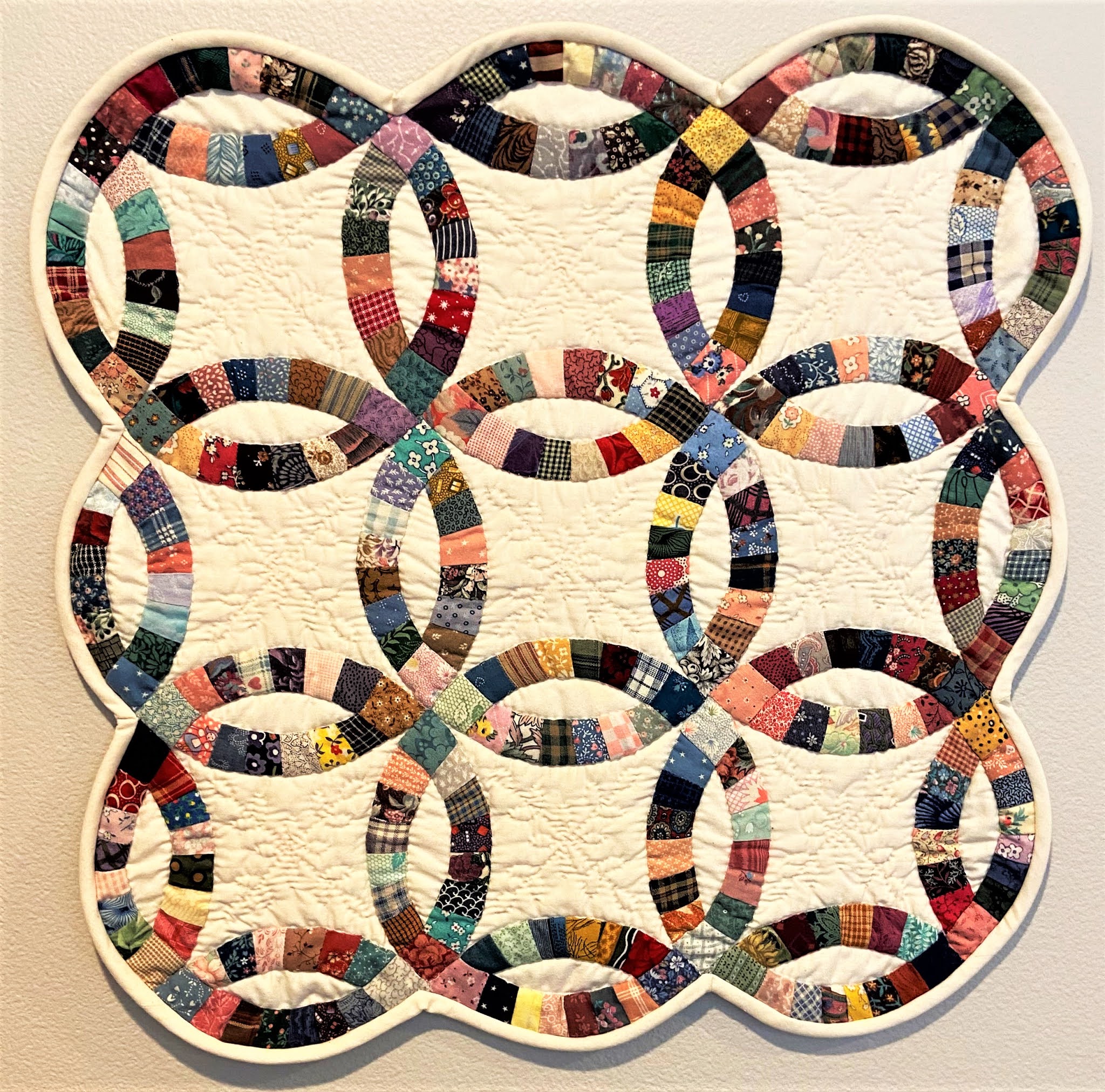
Amy Wright Boyer has been a quilter since before she can remember. She firmly believes her quilting love stems from genetics since her great-grand mother Laura was quilting in the early 1900s. Although her great-grandmother died when Amy was just five weeks old, her first recollection of loving quilts was when she used to read to her little sisters in bed under the comfort of great-grandma’s Double Wedding Ring quilt. She and her sisters would spend hours mesmerized by the many patterns they found in the quilts, surprised at the variety of materials their great-grandmother used, probably from scraps from old dresses, aprons, and other pieces of clothing from raising six sons and a daughter on a farm in Idaho.

The many nights of reading and looking over the quilt instilled in Amy a love of quilts, especially after her mother gave her a little Lone Star baby quilt that great-grandmother Laura had made her when she was born—quite possibly the last quilt she made before she passed away. Amy reminisces, “I still have it and treasure it.”

Over the years, the quilting bug continued to be stitched into Amy’s life. Her mother rented motel rooms and set up card tables to work on quilts when they attended a quilt show/conference every summer as part of the Festival of the American West in Logan, Utah. Teachers gathered there to teach classes. Making quilts was what they did in their spare time, usually after the conference. The women stayed in a hotel on the campus of Utah State University and worked until late into the night working on their quilt projects. Not only did they quilt, but they also developed a camaraderie that connects people forever.

When Amy was a young mother with babies, she would spend just a day or two with her mother. She recalled those incredible times with her mother: “We could both leave behind a few cares of our busy families and enjoy this special time together, sewing, quilting, and talking.”

About 10 years ago, Amy learned about a quilt retreat house just a few hours from where she was living. Eight members of the family and friends gathered at the quilt retreat house and had, according to Amy, “…such a wonderful time that it has become a tradition ever since.”

From her experiences growing up and having five children of her own, Amy knows that it is a challenge to find sufficient time in one’s day to work on hobbies. She jokes she has been quilting for 35 years but “took off 25 years to raise children.” She knows that quilters who are busy are challenged with space and then setting up and taking down quilting equipment.

Amy lamented that she had to finagle time to quilt: “I found that unless I had some time set aside and could get away for a couple of days, quilts just weren’t getting done very quickly. None of the homes or apartments that I lived in had a designated sewing room or even a place I could leave my equipment set up, so getting it all out was just too much work and took too much time to set it up very often, and baby’s nap times were never long enough.”

Thus, the concept for Maple Mountain Quilt Retreat stewed for many years, especially during the time Amy and her friends participated in quilting retreats over the past several years. When her mother passed away six years ago, she thought about those wonderful times around card tables and quilting until wee hours in the morning, not caring about anything except taking pieces of cloth and creating magical quilts, full of memories, stitch by stitch. She decided that she was going to do something about it.

But something always seemed to stand in her way of making her dream become reality. Part of the challenge of establishing a quilting retreat was her situation. She was divorced, living in an extremely rural area in Wyoming, managing a business, and trying to balance all of the associated responsibilities. Then, something magical happened.

She attended her high school reunion, met one of her former classmates, married this wonderful man who was willing to help her with her entrepreneurial ideas, and moved to Utah. At that point, Amy said, “Everything aligned and was the right time, place and season of life to create this quilting retreat.” One of the things that spurred her on was the thought that “Any time you can combine a passion you have with a business, it’s a great recipe for success.” Then, she added this caveat: “I hope so, anyway.”


Once she decided to create it, she jumped in with all of her business acumen and passion for quilting and creating, with a heavy dose of inspiration that came from her mother Jane and her great-grandmother Laura—all of which propelled her forward with this great project.


Maple Mountain Quilt Retreat was born in a beautifully renovated home, located in a fairly secluded area near the mouth of Spanish Fork Canyon and in the shadows of Maple Mountain. It is extremely convenient to restaurants and shops in Spanish Fork. Plus, if you want to walk or just take a break, a beautiful walking trail, just outside the front door, follows the river and the golf course across the street.


When a group or family books Maple Mountain Quilt Retreat, the entire home is theirs. Warm, inviting, and spacious with incredible outside views, Maple Mountain Quilt Retreat boasts of a fully equipped kitchen (except for the food), a beautiful dining room table which seats 10 comfortably, a cozy living room with plenty of seating, a large outdoor patio, six private quilt-themed bedrooms, four with queen beds, one with twin beds, and a suite with two double beds and a private bathroom with a shower and a large tub. Each guest receives a set of towels and a washcloth-color coded to their room/bathroom. Guests may use the laundry room with a washer and dryer.


While you sleep and eat upstairs, the downstairs workroom will cause giddiness and a delight in everyone and become the place where you will want to spend most of the time. Amy calls the workroom, “the star of the show”—eight individual workstations, all complete with spacious desks with pull-out extensions and a power strip at each station. The room is well-lit with LED canned lighting, and the floors are laden with brand new vinyl wood plank, allowing the easy pick up of pins and needles.


Additionally, there are large design walls to build your projects on for your convenience. Plus, you will have adjustable height cutting tables with large cutting mats and long rulers provided. Two ironing boards with large toppers and irons stand ready for your convenience in the workroom.


Guests will bring their own machines, notions, rotary cutters, and fabrics needed to create the project of their choice. If travel prohibits bringing your own sewing machine or if there is a sewing machine emergency (we hope that doesn’t happen, but we know that things happen!), Amy has a couple sewing machines available to rent.


One of her great epiphanies came when naming each of the bedrooms, mostly from her quilting experiences. When she attended a quilting retreat with her friends, she decided to make a difficult quilt for a twin-sized bed. The challenge came when she discovered the pattern for this quilt had been accidently packed in a moving truck on its way to her new home in Utah. Not wanting to sit around for five days worrying about the pattern in the moving truck, she opted to develop a whole new view of the quilt with new pieces of material.


As she began this exciting, yet arduous task of creating a quilt with a new pattern,  she thought to herself: “Quilters are crazy! Why do we do this? We cut up beautiful, perfectly good pieces of fabric and sew them back together again.” At that precise moment, she decided that when she started a quilt retreat, her theme for the first room would be “Quilters are Crazy.”


All of the other rooms also have stories and follow similar themes from her many and varied experiences with family and traveling. 

"Grandma’s Attic” originated from the love Amy has for her great-grandmother’s quilts, which used 1930s era fabrics, and from her own collection of the ‘30s replica fabrics, which she used to make a sampler quilt for the bed in the room.


"The Cabin” is the theme for the largest room because of her love of cabins. Her grandparents had one, and many of the quilt patterns have a frontier feeling.


"Sweet Amish Dreams” became the theme of another room because of Amy’s love of Amish quilts.


"Land That I Love” came to her because patriotism runs deep within Amy. “Besides,” she said, “I am a history nerd and who doesn’t love patriotic quilts?” Who can argue with that?


Because of her love for star quilts she really wanted a star-themed room, based on Van Gogh’s “Starry, Starry Night” painting. Even the closet knobs in the “Starry, Starry Night” room are stars.

Everyone will be pleasantly surprised that even the bathrooms have themes and are adorned with quilt-related art.

So, if you love to work on quilts in a quilting-theme retreat all day while enjoying chatting, eating, laughing, and having a great time without having to worry about work and home, then Maple Mountain Quilt Retreat is the perfect place for you.


Amy is sure you will be enlightened when you come because of the hours and years of preparation and its personalized touch. She said, “It’s been a really great creative outlet for me in preparing Maple Mountain Quilt Retreat, furnishing it, and making all of the quilts. I pay close attention to detail and love to add special unique touches to every room.”

Come join us at the Maple Mountain Quilt Retreat. As Amy would say, “Women (and lots of men) also love to get together and talk, laugh, eat and have fun. THIS is the reason for a quilt retreat. Taking home a beautiful creation is just a bonus.”


Of course, though, the Maple Mountain Quilt Retreat can be used for so many other retreats—crafts, stamping, watercolor or other art classes, scrapbooking, leadership, family history, family reunions, golfing, or just getting away for a few days.

For more information about the Maple Mountain Quilt Retreat, go to this website: https://maplemountainquiltretreat.com/.

See you soon! 


Sunday, April 25, 2021

Exceptional leaders are like delicious banana bread

Exceptional leaders are like delicious banana bread, a perfect blend of flour, oil, sugar, baking powder, baking soda, vanilla, and a touch of salt—


Flour to give texture, structure, and the framework to the team

Oil to meld the team together in a moist, live way

Sugar to add sweetener and flavor when times are challenging and sometimes overwhelming,  thus improving the overall quality of the team

Baking Powder to act as a leavening agent that allows the team to rise and do incredible things

Baking Soda to neutralize the acid or the negativity in a team, even adding a bit of tenderness to any situation

Vanilla to enhance the flavors of the whole team, even a complex one

Salt to perk up the depth, complexity, and melding of the entire team


Do you possess all these ingredients? 

If not, please message me, and let’s talk!

Monday, February 22, 2021

The Art of Leadership—Decision Making

The Art of Leadership—Decision Making

Over the years in my leadership positions, I have made numerous decisions, some disastrous and some genius, many more somewhere between the two. I have enjoyed making decisions. The better ones have always been more effective if I follow a process. The following ten decision-making principles constitute a process that has helped me make good decisions in the workplace and beyond.

Realize you are the decision maker

Ah, therein lies one of the biggest scopes of a leader. You have to make decisions. You cannot avoid them! Even not making a decision is a decision, albeit sometimes not necessarily a good one. Some decisions will be easy, some will be hard, some will create challenges for others, some may even offend others, some will be genius, some will be dumb, and some will show you are the greatest leader of all times. But mostly decisions will propel you and/or your organization along the path of success. 

Understand both sides of the decision

Perhaps, we should say that you must understand all sides of the decision. Initially, you may think that a “yes” or a “no” decision is in order. In reality, there are other sides of the decision: “Maybe not right now,” “Let’s involve others in the decision-making process,” “Are there aspects we are not seeing?” And many others. 

Do your homework

Decision-making constitutes doing your homework, whether it is visiting with others, reviewing the data, digging through the research, contemplating outcomes and workload, debating pros and cons, or acknowledging and ultimately accepting consequences. While doing your homework, you should also realize that your decision must be timely. 

Involve others in the decision-making process

You may have to make the final decision, but you should involve the people you have hired in helping you make the decision. If you have hired correctly, they are smart people, more than capable of reviewing with you any challenges that might come because of the decision. They probably can see angles you may not have foreseen. Trust them. Include them. Involving good heads, strong hearts, and good visionaries and pragmatists will always make you a better leader. 

Make the decision

Ironically, you have to make the decision. Of course, you will make the decision after you have done your homework, listened to others, and understand the potential consequences. But ultimately, the decision is yours. I know a few so-called leaders who think about it and think about and put off making the decision to the extreme. So, when the decision is finally made, people whose lives and jobs depend on the situation and have done everything in their power to help their leader with the decision have basically downgraded their opinion (s) of the leader. Leaders make decisions. Better stated: Leaders make timely, informed decisions.  

Understand the consequence (s) of your decision

Fortunately or unfortunately, there will be consequences to your decision. Many “ouches” will come your way, like ripping off a band aid. It may hurt for a moment or two—maybe even a year or two or even longer—but if you have done your homework, involved others, and made a good decision, then you can and should accept the outcome. 

Take ownership of the decision

There will be decisions that will not be good ones. It is inevitable. Instead of blaming others, take full ownership of it. You are/were/will be the ultimate decision maker. If the decision is not a good one, go to the evaluation/assessment component of the process. There may have been an angle you or your team overlooked. Or there may have been an unintended consequence. Do not be afraid to be accountable for the decision. Be sure, though, to give out the appropriate accolades because of a good decision. It will make you a better and a more effective leader. 

Assess the decision

Yes, you have to determine whether your decision is a good one. When you brush your teeth with an electric toothbrush, you know that’s a good decision, especially when you go to your six-month checkup, and the dental hygienist tells you your gums are looking good. Assessment should always be a part of the decision-making process. If changes need to occur, then make them, following a similar process you followed with some variation to make the right decision. 

Follow up

Once the decision has been made and you have completed the assessment, continue to follow up to make sure the decision is still a good one and on track toward success. Sometimes, you will have to review and perhaps reevaluate the decision. There is no shame in saying, “Well, that wasn’t the best decision we have ever made. Let’s take another look and try again.” 

Do not beat yourself up for the bad decisions

Guess what, bad decisions creep into the leadership equation. Unfortunately, you cannot make good decisions 100% of the time. You can make a zillion good decisions, but often there will be that one decision that may haunt you for the rest of your life. You cannot, however, continue to focus on that bad decision. Why? Because it will be so close in your line of vision that it will obstruct the bigger picture, the vision of what you need to do. The most amazing thing that can happen from making a bad decision is how you turn a bad decision into a good one and move forward. Or maybe even be willing to discard the decision completely. Sometimes, you just have to shake your head a few times and move on. 

Decision-making is one of the most challenging aspects of being a leader. It can create heartache and heartburn while simultaneously euphoria and self-satisfaction. The key to good, effective decision-making is this: You have to make them. Just make sure you have done everything you can to make a good decision and then be willing to accept whatever consequence that follows, good or bad. 

Darrel L. Hammon, Ph.D.

Sunday, February 14, 2021

Hay 20 cosas debe hacer cada día para su esposa o querida

  Para mis amigos que hablan Español!

Hay 20 cosas debe hacer cada día para su esposa o querida

Haga el día de su esposa, cada día, con estas acciones simples que le recordarán su amor por ella.

 Díle que la amas

 Le debes decir que la amas más que una vez al día, incluso cuando sales y cuando regresas a casa. Como texting es tan popular, puedes enviarle un texto a ella aunque la conversación con ella cara a cara sea la más importante e íntima.

Muéstrale la amas

De todas las cosas que necesitas hacer cada día, esta es quizás la más esencial. Le puedes cuanto la amas, pero la demonstración de su amor hacia ella es vital en su vida diaria. La demonstración. Hay miles de maneras cómo mostrarle a esposa cuanto la amas. Sea creativo — Todos. Los. Días.

 Sé organizado

Nada es menos atractivo que montones de ropa, zapatos, calcetines, envolturas de dulces, etc. esparcidas por todas partes. Seguramente puedes gastar unos pocos minutos para poner en su sitio tus zapatos, colocar sus calcetines en la ropa sucia o hasta colgar tus pantalones. Si eres experto en arrojar las cosas al suelo o amontonar unas camisas de un número astronómico en la silla al lado de tu cama, deja la pereza y sé más organizado.

Limpia alrededor del fregadero

Uno de los lugares más insalubres en su casa hoy en día, aparte del teclado de su computador, es el fregadero.  Límpialo cada día, y ella estará gratamente sorprendida y agradecida.

 Plancha la ropa

Trata de planchar por ti mismo. Tú serías sorprendido cuán relajante—y terapéutica—es planchar la ropa.

Escríbele una nota

Este podría ser una de las más sencillas. No tienes que hacer un curso de poesia, solo una nota que le deje saber que ella es hermosa, o desearle que tenga un buen día. Pónlo en su bolsillo o en algún lugar donde ella puede verla. Prueba con una nota adhesiva en el espejo en el baño.

Haz la cama

O por lo menos ayudarle hacer la cama. Siempre es más fácil cuando dos hacen la cama, y sólo se tarda unos minutos de su tiempo. Hay algo refrescante tener una cama ordenada.

No te quejes

Sin duda, puedes abstenerte de quejarte una vez al día—hazlo dos veces mañana. Quejarse es un signo de pesimismo.

 Léele a ella

Quizás no sea lectura, pero el leer algo a ella cada día es dulce e íntimo. Podría ser uno de los comics del diario, un versículo o dos de la Biblia, o un increíble pasaje de la novela que estás leyendo.

 Cepíllate los dientes

La frescura es la clave de la felicidad.

No le preguntes por lo que se debes hacer

Al preguntar significa que no eres un buen observador.  Probablemente, ella te ha insinuado y tal vez incluso ya te había dicho: "Querido, ¿podrías tú hacer esto?" Sé observador, mira a tú alrededor; y escúchela.

Pon los platos en el lavavajillas

 No hay ninguna razón para dejar los platos en el fregadero o en la mesa. Si el lavajillas está lleno, váciela.

Parquéate correctamente

El espacio del garaje es sagrado; así pues, asegúrate que tú auto quede en tú propio lado.  La usurpación de su puesto no le será gracioso. Si su coche está fuera, siga adelante y pon el carro de tú esposa adentro del garaje también. Es una de las cosas que muestra que la amas.

Lleva la basura afuera

Siempre te toca sacar la basura—Asi es.

Cierra con llave las puertas y apaga las luces

Por la noche, anda alrededor de la casa, cierra con llave las puertas y apaga las luces. Tu cónyuge se sentirá segura y protegida si completas esta tarea.

Abrásela

Abrazos por la mañana. Abrazos cuando regresas a casa. Abrazos cuando se acuestan. Y asegúrate que no sea sólo un apretoncito. Déle unos abrazos de oso.

Congratúlela

Recuérdale cuánto amas esa sonrisa de la cual te enamoraste. Hay muchas cosas que ama en ella, así le recuérdatelas a menudo.

Ayuda con los platos sin preguntar

No solo en ponor los platos en el lavavajillas, ayuda también a una vez limpios ponerlos en su sitio, y a la vez poner la mesa a la hora de la comida y recoger la mesa después de las comidas.

Cocínale

 Esto puede significar que tienes que aprender cómo cocinar algo. Pero tus esfuerzos serán muy apreciados cuando preparas una comida deliciosa para ella.

Tengan una conversación increíble cada día

En la sociedad de hoy, con tanta tecnología, días laborables largos, etc., rara vez tenemos el tiempo para la conversación. Su matrimonio será reforzado si llevas tiempo para hablar con tu esposa cada día.

Memorice esta lista, añade a ella y siempre recuerda dos palabras importantes: "Sí, Querida."


Saturday, February 13, 2021

20 things you should be doing for your Valentine on a daily basis

For this Valentine's Day, I know that many of you are scrambling to find the right Valentine's Day gift--maybe flowers, a beautiful card, clothes, a new car, perhaps even new shutters for your house. One of the gifts you could give to your Valentine is doing just simple things everyday, not just on Valentine's Day. In fact, Valentine's Day can be an every day occurrence. 

This year why not commit to 20 things you should be doing for your Valentine on a daily basis!

Life is full of lists we need to do, from shopping to what to buy to homework assignments. No list is more important for men than the 20 things you should be doing for your true Valentine on a daily basis. Once you figure that out, you may be home free.

#1: Tell her you love her—You must tell her you love her more than once per day, including when you leave and when you come home. Because texting is so popular, you can even text her although telling her face-to-face is the most important and intimate.

#2: Show her you love her—Of all of the things you need to do every single day is this one: Show her you love her. You can tell her all you want, but showing her is the sauna of everyday living. Show not telling is the writer’s mantra and should be a husband’s. Thousands of ways exist on how to show your wife you love her. Be creative. Every. Single. Day.

#3: Pick up after yourself—Nothing is less sexy or even unsanitary than heaps of clothes, shoes, socks, candy wrappers, etc. lying everywhere. Surely you can spend the few minutes to put away your shoes, place your socks in the dirty clothes, or even hang up your pants. It’s just plain laziness to just flop stuff on the floor or pile a zillion T-shirts on the chair next to your bed.

 #4: Clean around your sink—Yuck! One of the most unsanitary places in America today, aside from your computer keyboard, is your sink. Clean it every day and reach over and clean your spouse’s. She will be pleasantly surprised and grateful. Promise!

 #5: Iron your own clothes—Perhaps, all of your clothes are the no iron kind. Congrats! But there are some husbands whose dress shirts need to be iron, pants to be touched up, or even suit jackets to be steamed. Try doing it yourself. You would be surprised how relaxing—and even therapeutic—it really is.

#6: Write a note—This could be the easiest one you do. Your note doesn’t have to be on the cutest paper in the world. You could easily write on any piece of paper, including toilet paper, and put it in her pocket or out where she can see it. You could even put a sticky note on the mirror in the bathroom.

#7: Make the bed—Or at least help make the bed. It’s always easier when two make the bed, and it takes just a few moments of your time. There is just something about completeness when the bed is made.

#8: Don’t complain—Surely, you can refrain from complaining once per day. Make it twice tomorrow. Complaining is a sign of morbid pessimism.

#9: Read to her—Now, you may not be a reader, but reading to her something every day shows a bit savvy about things. It could be one of the comics from the daily paper, a scripture or two, or an incredible passage from the novel you are reading.

 #10: Brush your teeth—Okay, this one should be done more than once per day, but brushing your teeth the moment you get up and then after you breakfast will definitely reap benefits. Freshness is always the key to happiness.

 #11: Don't ask about what needs to be done—Having to ask definitely shows you are non-observant and not dialed in to what is happening around your house. She probably has hinted and maybe even come right out and said, “Dear, would you do this?” Be observant; look around; listen to her.

 #12: Put the dishes in the dish washer—Mega-easy task! Climb off your stool/chair, grab your utensils and cereal bowl, and walk the three feet to the dish washer. There is no reason to leave them in the sink or on the table.

 #13: Pull in the garage straight—Garage space is sacred space; so, make sure you pull in straight and on your own side. Encroaching on her spot is not cool. If her car is outside, go ahead and put hers away, too. It’s one of those showing-you-love-her things.

#14: Take care of the garbage—It’s always your turn to take out the garbage. No questions asked.  

#15: Lock the doors and turn out the lights—At night, walk around the house, lock the doors, and turn out the lights. Your spouse will feel much safer if you have done due diligence.

#16: Give her a hug or two—This is a no-brainer. Hugs in the morning. Hugs when you come home. Hugs when you go to bed. Make sure they aren’t just a mere squeeze. Give her bear hugs.

#17: Complement her how nice she looks—Complimenting your lovely bride once a day—or even more would be a good thing—reaps huge benefits.

#18: Help with the dishes without being asked—This one is different than putting your dishes into the dish washer. If you or your spouse cooks, which they normally do, jump right in and help with the dishes, either washing or drying.

#19: Make one of the meals—What? Make one of the meals? That may mean you have to learn how to cook something, learn how to heat up leftovers, or even create a salad. You will be totally surprised how she reacts if you arrive home first and have a delicious meal prepared for her.

#20: Have an incredible conversation each day—In today’s society with all of the technology, streaming video, long work days, etc., we seldom have time for conversation. Your marriage and your relationship with your wife will endure even longer and become stronger when you take the time to have an incredible conversation with her. It’s almost a reconnection each day.

Memorize the list, add to it, and, oh, and always remember two important words: “Yes, Dear.”


*From https://www.eastidahonews.com/2015/06/20-things-wife-every-day/